
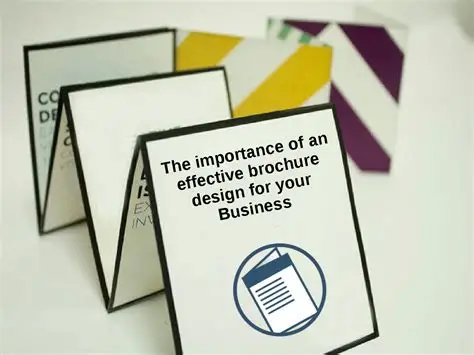
Important Elements to Consider for Brochure Printing
Brochures remain one of the most effective marketing tools for businesses. They combine visuals and information in a compact format that customers can easily carry and reference. To make your brochure impactful, it’s essential to focus on the right elements during the design and printing process.
1. Design and Layout
- Keep the design clean, organized, and visually appealing.
- Use consistent fonts, colors, and branding elements.
- Ensure the layout guides the reader’s eye naturally from one section to the next.
2. Quality of Images and Graphics
- Use high‑resolution images to avoid pixelation.
- Incorporate graphics that support your message rather than distract.
- Align visuals with your brand identity for consistency.
3. Content and Messaging
- Keep text concise and easy to read.
- Highlight key benefits, services, or products.
- Use headings, bullet points, and call‑to‑action statements to make information scannable.
4. Paper and Finish
- Choose paper stock that reflects your brand’s quality.
- Glossy finishes work well for vibrant visuals, while matte finishes give a professional, elegant look.
- Consider folding styles (bi‑fold, tri‑fold, or custom folds) based on the amount of content.
5. Printing Quality
- Ensure colors are sharp and consistent.
- Work with a reliable printing partner who uses modern technology.
- Double‑check proofs before finalizing to avoid costly errors.
“Want to discover how to design brochures that truly impress? Read our guide on the key elements today.”
Why you should choose Powerstride?
Powerstride is more than a printing company — we’re your creative partner. With high‑quality finishes, fast turnaround times, and flexible solutions, we help businesses and creators bring their ideas to life. Our blend of modern technology and personalized support ensures every project stands out, making your vision not just possible, but truly impactful.
3 Comments
Variations in the floor plan, window location, and interstitial outdoor spaces enhance this material homogeneity. The goal was to produce a unified whole using a modern design language, where attention to materiality and detail is evident. All flats have two sides and are in close proximity to the outside world.
Variations in the floor plan, window location, and interstitial outdoor spaces enhance this material homogeneity. The goal was to produce a unified whole using a modern design language, where attention to materiality and detail is evident.
Variations in the floor plan, window location, and interstitial outdoor spaces enhance this material homogeneity. The goal was to produce a unified whole using a modern design language, where attention to materiality and detail is evident. All flats have two sides and are in close proximity to the outside world.